
Remez in the Bible and the Humanity of Jesus on the Cross
Please note that this article may contain affiliate links. As an Amazon Associate, I earn on qualifying purchases at no additional cost to you. You can read more at the bottom of this page or read my full disclosure on my Affiliate Disclosure Page
The Bible is full of hidden treasures waiting to be uncovered, and one of these treasures is the concept of “remez.” If you’ve ever wondered how Jesus’ words on the cross connect to Old Testament prophecies, you’re in the right place. This post will explore what remez in the Bible means and how it helps us understand the deep connection between Jesus’ humanity and the scriptures He quoted during His crucifixion.
Be sure to grab your FREE Remez in the Bible Study and Reflection Questions for your study binder at the end of this post!
What is Remez?
Remez is a Hebrew word that means “hint” or “suggestion.” In the context of the Bible, remez refers to a teaching technique where a word or phrase hints at something more profound, often pointing to a larger scriptural context.
Imagine it as a gentle nudge that encourages you to look deeper into the scriptures to find hidden meanings. This method is rooted in Jewish tradition and is one of the four ways of interpreting the Bible, known collectively as PaRDeS—an acronym for Peshat (simple meaning), Remez (hint), Drash (inquiry), and Sod (secret) and I will explain that further in a moment.
An example of remez in everyday life could be something as simple as hearing the beginning of a well-known song. For instance, if I were to say to you “Never gonna give you up, never gonma let you down…” most of you likely heard the tune in your head and could complete the line (yes I just Rick Rolled you!). That is how the remez works.
Similarly, when a passage in the Bible uses remez, it’s meant to draw the reader’s attention to a larger story or deeper truth.
Understanding PaRDeS More: The Four Levels of Biblical Interpretation
As mentioned, PaRDeS is an acronym that represents the four traditional levels of interpreting the scriptures in Jewish thought. These methods of interpretation allow for a deeper and more nuanced understanding of the Bible, revealing layers of meaning that go beyond the surface and “dig for the meat” of the Word.
The acronym PaRDeS itself is a Hebrew word that means “orchard” or “garden,” symbolizing the richness and variety of insights that can be gathered from the scriptures. Each level of interpretation offers a different perspective, and together they provide a comprehensive approach to studying the Bible.
- Peshat (פְּשָׁט) – The Simple or Literal Meaning:
- Peshat is the first level of interpretation and refers to the straightforward, plain meaning of the text. It focuses on the literal and grammatical understanding of the words as they appear. This level is concerned with what the text says directly, without looking for hidden meanings or symbolic interpretations. For example, in Genesis 1:1, “In the beginning, God created the heavens and the earth,” the peshat understanding is simply that God is the creator of the universe.
- Remez (רֶמֶז) – The Hint or Allegorical Meaning:
- Remez is the second level of interpretation and refers to a deeper, more symbolic meaning that is hinted at by the text. It goes beyond the literal words to suggest connections with other scriptures or underlying themes. Remez often involves recognizing that a verse or phrase alludes to something more profound, such as a prophecy or a theological concept. For instance, when Yeshua quotes Psalm 22 on the cross, He is using a remez to point His listeners to the entire psalm, which prophesies His suffering and ultimate vindication.
- Drash (דְּרָשׁ) – The Inquired or Midrashic Meaning:
- Drash, also known as midrash, is the third level of interpretation and involves deeper exploration and investigation of the text. It often includes homiletical or sermonic interpretations, where the reader seeks to understand the moral, ethical, or spiritual lessons of the scripture. Drash can also involve comparing different passages to find a coherent message or uncovering a teaching that applies to daily life. An example of drash would be interpreting the story of Abraham’s near-sacrifice of Isaac (the Akedah) as a lesson in faith and obedience to God’s will, beyond its historical or literal meaning.
- Sod (סוֹד) – The Secret or Mystical Meaning:
- Sod is the fourth and deepest level of interpretation, dealing with the hidden or mystical aspects of the text. This level often involves esoteric knowledge, such as Kabbalistic interpretations, where numbers, letters, and symbolic meanings are explored. Sod is concerned with the mysteries of God and the universe that are embedded in the scriptures. For example, the sod interpretation of the number seven in the Bible might explore its significance as a symbol of completeness or divine perfection, which is a recurring theme in both the creation narrative and the Sabbath commandment.
Together, these four levels—Peshat, Remez, Drash, and Sod—provide a holistic approach to understanding the Bible. While Peshat offers clarity and straightforward meaning, Remez invites readers to look for deeper connections, Drash encourages thoughtful reflection and application, and Sod opens the door to the mysteries of the divine.
The beauty of PaRDeS is that it allows the scriptures to speak to readers on multiple levels, offering insights that are both simple and profound, practical and mystical (and by mystical we don’t mean the worldly sense. It literally means “having a spiritual meaning or reality that is not immediately apparent to the senses or the mind.” (Miriam Webster)).
Through PaRDeS, believers can engage with the Bible in a way that nourishes the mind, heart, and soul, revealing the fullness of God’s word.
The Purpose of Jesus’ Remez on the Cross: A Remez to Psalm 22
Hanging on the cross was an excruciating ordeal that put immense strain on Yeshua’s body. The position of crucifixion stretched His arms outwards, causing His chest muscles and diaphragm to become paralyzed.
This made breathing incredibly difficult because the only way to take in air was to push up on the nails driven through His feet, forcing His body upwards to expand His lungs. Each breath required Yeshua to endure searing pain as He strained against the nails and the wood scraping along His back as he fought the intense pressure in His chest.
The simple act of speaking while on the cross would have required extraordinary effort, making every word He uttered—especially His cry of “My God, my God, why have You forsaken me?”—a powerful testament to His enduring will and determination to fulfill His mission.
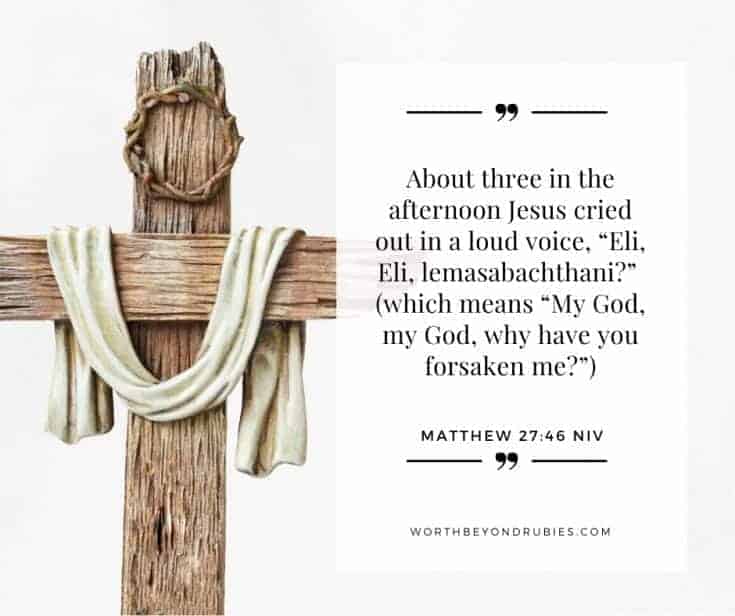
When Yeshua cried out, “My God, my God, why have You forsaken me?” He wasn’t just expressing His deep anguish; He was strategically using a remez to convey a profound message. By quoting the first verse of Psalm 22, Yeshua was pointing His listeners—especially the religious leaders and those well-versed in scripture—towards the entire psalm.
Psalm 22 begins with a cry of abandonment but ultimately unfolds as a vivid prophecy of the Messiah’s suffering and ends with a declaration of God’s deliverance.
Yeshua’s use of remez served multiple purposes. First, it was a way of asserting His identity as the Messiah. By directing the minds of His audience to Psalm 22, He was revealing that His crucifixion was not a defeat, but a fulfillment of prophecy.
The psalm details specific aspects of the crucifixion, such as the piercing of hands and feet and the casting of lots for clothing—events that were unfolding right before their eyes. This was Yeshua’s way of saying, “Look at what is happening and remember what was foretold. This is part of God’s plan.”
Second, the remez was a subtle but powerful call to faith. For those who recognized the reference, it was a reminder that even in the darkest moments, God is in control. Psalm 22 transitions from despair to trust, ending in praise and hope.
By invoking this psalm, Yeshua was signaling that His suffering would lead to victory, not just for Himself, but for all who would believe in Him. It was a message of hope in the face of despair, emphasizing that God’s promises are always fulfilled.
In essence, Yeshua’s use of remez on the cross was a way to communicate to those who understood the scriptures that His death was not the end, but the beginning of the fulfillment of God’s redemptive plan. It underscored His messianic identity and invited His followers to see the crucifixion not as a moment of defeat, but as the prophesied path to ultimate victory and salvation.
The Prophetic Fulfillment
Psalm 22, written by King David, vividly describes the suffering of someone who is mocked, surrounded by enemies, and enduring physical torment. These descriptions are strikingly similar to what Yeshua experienced on the cross.
As I said, when He referenced this psalm, Jesus was showing that His suffering wasn’t just a tragic event—it was the fulfillment of prophecy, proving that He was the Messiah foretold in the scriptures. This use of the remez connects the Old Testament to the New Testament in a powerful way, demonstrating the continuity of God’s plan for salvation.
The Overlooked Humanity of Jesus
It’s easy to focus on Yeshua’s divinity, but His humanity is just as important, especially when considering His suffering on the cross. The pain and emotional agony He went through weren’t just symbolic; they were very real. Yeshua felt every bit of that pain, just as any human would. His cry of abandonment reflects the depth of His human experience, reminding us that He truly walked in our shoes.
Understanding Jesus’ humanity is crucial because it means He knows what it’s like to suffer, to feel abandoned, and to experience fear.
This makes Him not just a distant divine figure but someone who deeply understands our struggles and can empathize with us in our darkest moments.
Balancing Divinity and Humanity
The balance between Jesus’ divinity and humanity is key to understanding the full significance of the crucifixion. While He was the Son of God, He was also fully human, experiencing pain, suffering, and even death. His cry from the cross highlights this humanity, yet it also reaffirms His divine mission to fulfill the scriptures. Recognizing this balance helps us appreciate the depth of Jesus’ sacrifice and the unique role He plays as Messiah.
Why Jesus’ Humanity Matters
Jesus’ humanity matters because it means He can truly relate to us. Hebrews 4:15 tells us that Jesus can sympathize with our weaknesses because He has been tempted and suffered just as we do, yet without sin.
Knowing this can bring great comfort, especially when we face our own struggles. Jesus’ experience of suffering and abandonment on the cross shows that He is with us in our pain, offering not just sympathy but a deep understanding of what we’re going through.
The Dual Significance of Jesus’ Cry
Jesus’ cry from the cross serves two important purposes: it asserts His identity as the Messiah and resonates with the human experience of feeling forsaken. By quoting Psalm 22, Jesus was making a clear statement about who He was and what His suffering meant.
At the same time, His words reflect a very human emotion—one that many of us can relate to. This dual significance makes His cry one of the most powerful moments in the Bible, as it connects His divine mission with His human experience.
Reflecting on the Cross Today
Understanding remez in the Bible and recognizing Jesus’ humanity on the cross can deepen our appreciation for the scriptures and the message of the Gospel. The Bible is a richly interconnected text, with each part contributing to a larger story of God’s love and redemption.
Personal Application
As we reflect on the cross, we can find comfort in knowing that Jesus understands our pain and suffering. His cry of abandonment encourages us to bring our own struggles to God, trusting that He hears us and will help us through our trials. Recognizing the use of remez and understanding Jesus’ humanity can deepen our faith and draw us closer to Him. In every hardship, we can look to Jesus’ example on the cross and find hope, knowing that He is both our Savior and our empathetic companion in suffering.
FAQ Section
Q: What does “Remez” mean in the context of the Bible? A: Remez is a Hebrew term meaning “hint.” It refers to a method of biblical interpretation where a word or phrase in scripture hints at a deeper, often prophetic, meaning, connecting to other passages within the Bible.
Q: How did Jesus use Remez on the cross? A: Jesus used Remez by quoting Psalm 22:1 when He cried out, “My God, my God, why have You forsaken me?” This allusion pointed to the entire psalm, which is a prophecy about the suffering and eventual vindication of the Messiah.
Q: Why is it important to understand Jesus’ humanity? A: Understanding Jesus’ humanity is crucial because it allows believers to relate to Him on a personal level. His experiences of suffering and abandonment make Him an empathetic Savior who fully understands human pain and struggles.
Q: How does Psalm 22 connect to the crucifixion of Jesus? A: Psalm 22 contains prophetic details about the suffering of the Messiah, including the piercing of hands and feet and the casting of lots for His clothing. These were fulfilled in Jesus’ crucifixion, highlighting Him as the prophesied Messiah.
Q: What theological significance does Jesus’ cry from the cross have? A: Jesus’ cry from the cross has deep theological significance as it asserts His messianic identity through Remez, fulfills Old Testament prophecy, and connects His suffering to the universal human experience of feeling forsaken.
Don’t forget to grab your FREE Remez in the Bible Study and Reflection Questions below!
Remez.
I love that! And I’m always appreciative when connections between Old and New Testaments are pointed out by those with more background than I have. Truly, the story of Scripture is all one story, one huge meta-narrative pointing to Jesus.
It IS all one story! It is all beautifully interwoven together to bring about God’s perfect plan! That is why I so enjoy sharing those connections with people!
Do you ever listen to podcasts? You’d love Help Me Teach the Bible by Nancy Guthrie. Just today I was listening to her teaching on how to effectively connect the dots from the Old Testament to Jesus. So good and so skillful.
I don’t listen to them as much as I should but I’ll check it out!! Thank you!
This makes me cringe just thinking about it. The Easter season is so bittersweet for me. Knowing that it was me who put Him there is such a hard pill to swallow, but I am so grateful He came to fulfill the law. So glad that He made sure we knew exactly who He was and why He had to do what He did.
Yes but we can take comfort that He lives!
This post is very appropriate for the upcoming Easter season when our focus is so much more on cross. Pinned! Thanks for linking up at InstaEncouragements!
Thank you so much!!
Interesting how Jesus spoke in parables and this is new to me. He really did demonstrate that He was the Messiah.
Yes He did!!
What an interesting post! I don’t think I ever thought that Jesus was calling to mind the Psalm for the Pharasees and Saducees. I knew He was quoting Psalm 22 though. Thank you for sharing this!
Thank you so much!!
I had never heard of remez, but it sounds like a technique that works. I had never thought of Jesus cry there as a remez, but surely that’s exactly what He was doing. They knew they were crucifying the Messiah, yet stubbornly didn’t believe. May God help us to remember that Jesus loves us so much, He was willing to go through all that torture and death. May we love Him more and more. Blessings to you! I’m your neighbor at #TuneInThursday also this week. 🙂
Thank you Gayl! Yes, as a Jewish Rabbi, Jesus knew the impact that would have on the men around Him. Their hearts were definitely hardened toward Him. Thank you for stopping by!
This post impacted my heart, Diane.
The horror the Lamb endured for us! But these words are so full of hope…”Oh but the Lion is coming! The Lion of the Tribe of Judah! The Lamb of God who took away the sin of the world is coming again to reign and He is bringing the armies of Heaven with Him!”
I’m looking forward to that day!
Blessings,
Tammy
I am too Tammy!!! Thank you!
Diane, I learned something new today. I didn’t know what “Remez” meant. So this is great insight and a fresh word for me to understand Jesus words on the cross. Love that He was letting those nearby know He was indeed the Messiah. Your neighbor this week at Tune in Thursday.
Thank you so much Karen! I’m so happy you enjoyed it!
This post gave me goosebumps. I learned this years ago and it’s something I will never forget. It totally changes the way I look at what He said on the cross.
Yes Jesus never said things lightly! It DOES totally change our perspective doesn’t it?
Love that you bring this perspective from the Hebrew – thank you. Its wonderful we can gain fuller understanding of Jesus’ statement. Wow! Religion has certainly robbed us and kept truth hidden this side of the veil but it has and is always there for those who seek Yeshua ….
I have a question – When the veil was torn in two did it still remain hung up?
That is a great question and one I am not sure I can answer with any degree of certainty given the timeframe when these events were written and also the destruction of the Temple in 70 CE. I can look into it and see what I can find. One important detail about the Holy of Holies at that time is that it was actually empty.The Ark of the Covenant (the earthly one anyway) went missing in 586 BCE. We don’t know if it was destroyed or stolen or hidden but the Second Temple’s Holy of Holies was an empty room. So when the veil was torn, there was no Ark to expose. It is possible it was repaired at least temporarily but again, I would have to see if that information exists. It is not likely to have been preserved in Jewish history given its connection to the Gospels.