
Tribe of Judah in the Bible: The Legacy of Kings, Praise, and Prophecy
Please note that this article may contain affiliate links. As an Amazon Associate, I earn on qualifying purchases at no additional cost to you. You can read more at the bottom of this page or read my full disclosure on my Affiliate Disclosure Page
When we open the Scriptures and read about the tribes of Israel, one name seems to echo louder than the rest: Judah. Whether we’re reading stories of kings or studying end-time prophecy, the tribe of Judah is always there — central, resilient, and deeply symbolic.
The tribe of Judah in the Bible is not just an ancient family line; it’s a source of spiritual identity, leadership, and messianic hope. From Genesis to Revelation, Judah’s name weaves through the narrative like a scarlet thread of praise, promise, and purpose.
Why does Judah still matter today? Because from Judah comes the lineage of King David, and ultimately, Yeshua the Messiah — the Lion of the Tribe of Judah. But there’s more. Judah is also a picture of redemption, transformation, and how God raises up leaders from unexpected places. For believers in Yeshua, the story of Judah is both an anchor in the past and a light toward the future.
Be sure to download your free copy of our printable Tribe of Judah Bible study, Reflection and Action Challenge guide with worksheets at the end of this post! No sign up required!
Who Was Judah in the Bible?
The story of the tribe of Judah begins with a name. In Hebrew, Yehudah (יְהוּדָה) means “praise.” His mother Leah, weary from rejection but holding on to faith, gave him that name saying, “This time I will praise ADONAI” (Genesis 29:35). Praise — even in pain — became his identity.
Judah was the fourth son of Jacob and Leah, and his early life was complicated. He played a key role in the betrayal of his younger brother Joseph. Although it was Reuben who first tried to spare Joseph’s life, it was Judah who proposed selling him to slave traders instead of killing him (Genesis 37:26-27). At first glance, it doesn’t seem noble, but it kept Joseph alive — and that choice would later be redeemed.
Later in life, we see Judah transform. When Benjamin’s life is on the line in Egypt, Judah steps up and offers himself in Benjamin’s place (Genesis 44:33). This moment marks a powerful shift. The same man who once handed over his brother now stands ready to lay down his life for another. It’s no wonder that leadership would eventually flow through him.
The Tribe of Judah: Origin and Lineage
Judah’s descendants would become one of the most prominent tribes in Israel. After the Exodus from Egypt, the twelve tribes were counted and organized. Judah was given a position of honor — marching first during the wilderness journeys (Numbers 2:3-4). His tribe was the largest, signaling strength and leadership.
The tribe of Judah includes notable names: Perez, Hezron, and Boaz — all ancestors of King David. When Ruth, a Moabite widow, married Boaz, she was grafted into the lineage of Judah, showing how God’s covenant could extend to the nations.
From David’s line came the promise of an eternal kingdom. Matthew’s Gospel opens with this genealogy, tracing the Messiah’s lineage from Judah to David to Yeshua (Matthew 1:1-16). This isn’t just a list of names. It’s a royal legacy — filled with sinners, saints, and redemption.
One of the most unexpected and powerful moments in Judah’s early lineage is the story of Tamar in Genesis 38.
After being wronged and left childless by Judah’s family, Tamar disguised herself and confronted Judah’s neglect of justice. Through her boldness, she bore twins — Perez and Zerah. Perez would go on to become a key figure in the messianic line. Tamar’s story is raw and uncomfortable, yet deeply redemptive.
She became the first woman named in Matthew’s genealogy of Yeshua (Matthew 1:3), showing us that God uses those who have been overlooked, mistreated, or pushed to the margins. Her righteousness, as Judah later confessed, preserved the promise — reminding us that God’s purposes are never hindered by human failure.
Prophetic Significance of Judah in the Bible
The tribe of Judah in the Bible is soaked in prophetic meaning. It begins with Jacob’s deathbed blessing in Genesis 49. Speaking over his sons, Jacob said of Judah:
“The scepter will not pass from Judah,
Genesis 49:10 tlv
nor the ruler’s staff from between his feet,
until he to whom it belongs will come.
To him will be the obedience of the peoples”
This is no ordinary blessing. It’s a messianic prophecy — a vision of a coming ruler whose authority will not fade. The “scepter” is a symbol of kingship. “To him will be the obedience of the peoples” points toward a ruler whose reign would include not just Israel, but the nations.
Moses, too, prophesied over Judah before his death: “Hear, ADONAI, the voice of Judah! Bring him to his people. His hands contended for him — so You will help him against his foes” (Deuteronomy 33:7). Even in exile or conflict, Judah’s voice would be heard.
From these early words, we begin to see Judah as not just a tribe, but a vessel for God’s kingship and redemptive plan.
Judah and Leadership in Ancient Israel
Leadership was deeply embedded in Judah’s destiny. In the census of Numbers 1, Judah’s tribe had the highest population, a sign of their strength. More than that, Judah was chosen to lead the tribes as they marched through the wilderness.
During the conquest of Canaan, Judah’s tribe was the first to fight (Judges 1:1-2). And among them was Caleb — a man of faith who, alongside Joshua, brought back a good report of the land. Caleb’s courage reflected the spirit of Judah: bold, faithful, and willing to stand when others wouldn’t.
This kind of leadership, born from repentance and faith, set the stage for what was to come.
The Kings of Judah: From David to Jesus
David, the shepherd-king, rose from the tribe of Judah. His reign marked the golden era of Israel, and God made a covenant with him:
“So your house and your kingship will be secure forever before you; your throne will be established forever.”
2 Samuel 7:16 tlv
David’s son Solomon built the Temple in Jerusalem, uniting the kingdom in worship. But after Solomon’s death, the kingdom split. The northern tribes formed Israel, and the southern tribes — led by Judah — became the kingdom of Judah.
Through many ups and downs, Judah’s line endured. Even when Israel was exiled, the promise to David’s house stood firm — fulfilled in Yeshua.
Judah in the Divided Kingdom Era
When the kingdom split, Judah remained distinct. Unlike the northern kingdom, which quickly turned to idolatry, Judah retained a remnant of faithfulness. Kings like Hezekiah and Josiah brought revival, rediscovering Torah and restoring worship.
Yet Judah also struggled with apostasy. Prophets like Isaiah and Jeremiah warned of judgment. Still, Judah remained the last standing tribe — a flickering flame of the covenant.
Exile and Return: Judah’s Babylonian Captivity
In 586 BCE, Babylon conquered Judah and destroyed the Temple. The people were exiled, and Jerusalem lay in ruins. But God had not forgotten His promises.
Seventy years later, Judah returned. Under leaders like Ezra and Nehemiah, the Temple was rebuilt, and the people recommitted to the Torah. This return was not just physical — it was spiritual renewal. Judah was back in the land, carrying the hopes of a Messiah still to come.
Jesus and the Lion of the Tribe of Judah
Fast forward to the book of Revelation, where John weeps because no one is worthy to open the scroll. Then a heavenly elder says:
“Then one of the elders tells me, “Stop weeping! Behold, the Lion of the tribe of Judah,[a] the Root of David,[b] has triumphed—He is worthy to open the scroll and its seven seals.”
Revelation 5:5 TLV
This is Yeshua. He is both lion and lamb. As the Lion of Judah, He fulfills the ancient prophecy of kingship. As the Lamb, He offers Himself as a sacrifice for sin.
In Yeshua, the fullness of Judah’s destiny comes alive — power, humility, and redemptive glory.
Judah in End Times Prophecy
Judah’s story doesn’t end with Yeshua’s first coming. Prophetic books like Zechariah point to Judah’s role in the end times. Zechariah 14 describes a day when all nations will gather against Jerusalem — but ADONAI will fight for His people.
Revelation speaks of a sealed remnant from the tribes of Israel — including Judah — and a restored Jerusalem where the King of kings will reign. Judah is still in the picture, not just as history, but destiny.
The Symbolism of the Tribe of Judah
Judah’s emblem is the lion — a symbol of strength and majesty. His stone on the high priest’s breastplate was the garnet or ruby, associated with blood, kingship, and passion.
Judah’s banner in the wilderness was crimson — reminding us of redemption. And the “scepter” promised in Genesis still stands as a sign of spiritual authority.
All of this shows us that Judah is more than a tribe — it is a signpost pointing to the character of God and the coming of His kingdom.
Spiritual Lessons from the Tribe of Judah
So what can we learn from the tribe of Judah in the Bible?
- Praise is powerful. Judah means praise, and we’re reminded that worship is not optional — it’s a weapon. When we praise, we align with heaven.
- God uses imperfect people. Judah was flawed, but God still used him to carry the Messiah’s line. Your past doesn’t cancel your calling.
- True leadership is forged in repentance. Judah grew through failure. His transformation gives us hope that our failures can also be redeemed.
Judah’s Role in Modern Israel and Christianity
Today, Judah is still present. The term “Jew” comes from “Yehudi” — meaning a person from Judah. Despite centuries of dispersion, the tribe of Judah has survived. The return of the Jewish people to the land of Israel in the 20th century is a living witness of prophecy fulfilled.
For believers in Yeshua, understanding Judah helps us connect the dots between the covenants — old and new — without replacing or ignoring Israel. Judah reminds us that the gospel is both Jewish and global, and that God’s promises are still alive.
My Final Thoughts
The story of Judah in the Bible is not just ancient history — it’s a living, breathing part of God’s redemptive plan. From a flawed brother to a royal tribe, from David to Yeshua, Judah carries the weight of promises and the fire of praise. For those who believe in Yeshua, Judah shows us how God turns weakness into leadership and how praise can become a path to power.
I’d love to hear your thoughts. What stood out to you most about the tribe of Judah? Do you see its legacy in your life?
Drop a comment to share what you learned from the history of the Tribe of Judah.
Come share with us in the She Opens Her Bible Study Facebook group — we’d love to journey through the Word together.
Don’t forget to download your free copy of our Tribe of Judah Bible study, Reflection and Action Challenge guide below!
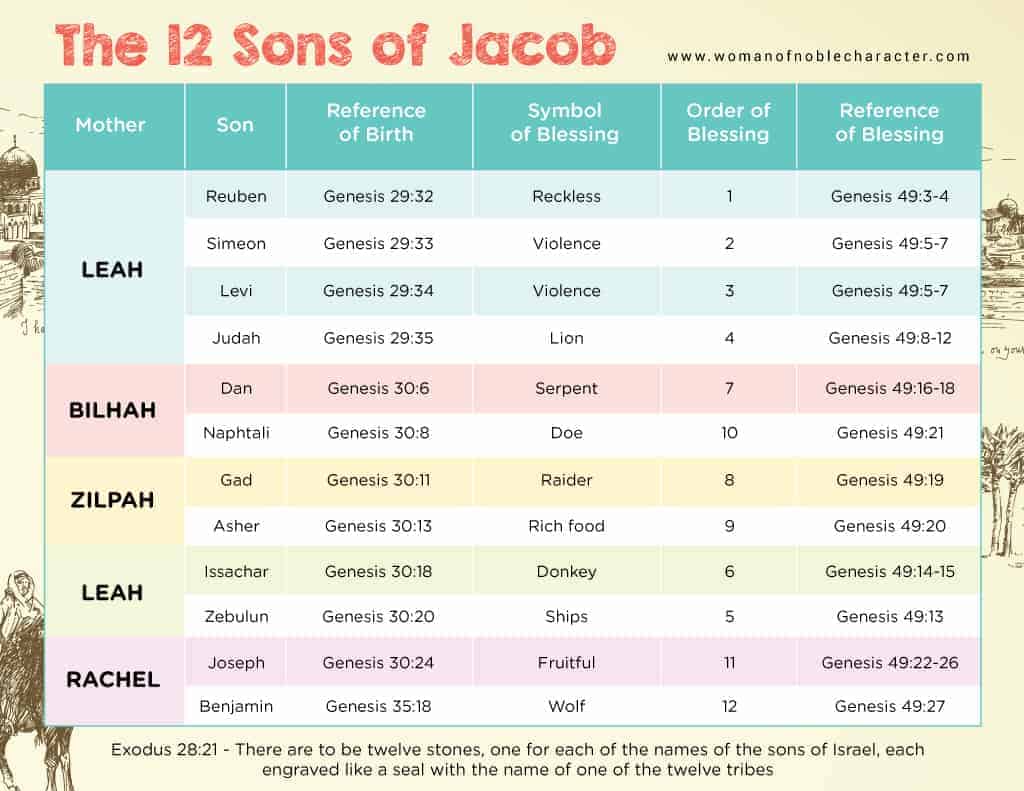
Click image to download a PDF version of this chart!
FAQs About the Tribe of Judah in the Bible
What is the spiritual meaning of Judah?
Judah means “praise.” Spiritually, it represents worship, leadership, and transformation through God’s grace.
Was Jesus really from the tribe of Judah?
Yes. Both Matthew and Luke trace Yeshua’s genealogy through David, who was from the tribe of Judah.
How is Judah different from the other tribes?
Judah was chosen for leadership and kingship. It is the tribe of David and the Messiah, unlike other tribes which had different roles.
What does “Lion of Judah” mean today?
It refers to Yeshua’s identity as the victorious, royal Messiah from Judah — a symbol of strength, justice, and deliverance.
Is the tribe of Judah still active?
Yes. The Jewish people today are largely descendants of Judah, and their presence in the land of Israel fulfills biblical prophecy.
Download Your Free Study and Reflection Questions

About Our Author
Diane Ferreira is a Jewish believer in Yeshua, a published author, speaker, seminary student, wife, and proud mom. She is the author of several books, including The Proverbs 31-ish Woman, which debuted as Amazon’s #1 New Release in Religious Humor. She is currently pursuing her graduate degree in Jewish Studies, with her favorite topics being the early church and Biblical Hebrew. Diane writes and teaches from a unique perspective, bridging her Jewish heritage with vibrant faith in the Messiah to bring clarity, depth, and devotion to everyday believers.
When she’s not writing, studying, or teaching, you’ll find her curled up with a good book, crocheting something cozy, or researching her next trip.
📚 Learn more here! | 💬 Join the discussion on our Substack!
Tree of Life (TLV) – Scripture taken from the Holy Scriptures, Tree of Life Version*. Copyright © 2014,2016 by the Tree of Life Bible Society. Used by permission of the Tree of Life Bible Society.
Hi Sue,
Thank you for all you do, especially the history of Judah. It was very encouraging for all of us to comprehend it; and we are continuing to comprehend on other tribes and the purposes.
May I please recommend for the video to be close-captioned? Much appreciated.
Blessings,
Amy
I’m so glad that it blessed you. I’m currently working on close-captioning all of my videos. Thank you for the suggestion. Also, thank you for sharing and for stopping by. Have a beautiful, blessed day!
Joseph is Patriarch of Messiah. Of this there can be no doubt. Judah married a Canaanite woman, and his first two sons with her were struck dead, they were so evil. Finally, Judah married Tamar, his daughter-in-law and twins were the issue of this incestuous union. Judah was called to the front lines in order that he would be destroyed first. Achan was of Judah also. What more do you need to know.
Also: the tribe of Dan is Germany, Assyria, the King of the North.