
Benjamin in the Bible: Son of Sorrow, Son of the Right Hand
Please note that this article may contain affiliate links. As an Amazon Associate, I earn on qualifying purchases at no additional cost to you. You can read more at the bottom of this page or read my full disclosure on my Affiliate Disclosure Page
When we think of Benjamin in the Bible, we might picture the baby of the family, the youngest son of Jacob. But Benjamin’s story is so much deeper than birth order. His name alone holds a powerful transformation, from sorrow to strength.
In this post, we’re unpacking the story of Benjamin in the Bible, and I promise, there’s something in here for all of us: about grief, identity, and how God flips the script when we least expect it.
Be sure to download your free copy of our printable Benjamin in the Bible Study, Reflection and Action Challenge guide with worksheets at the end of this post! No sign up required!
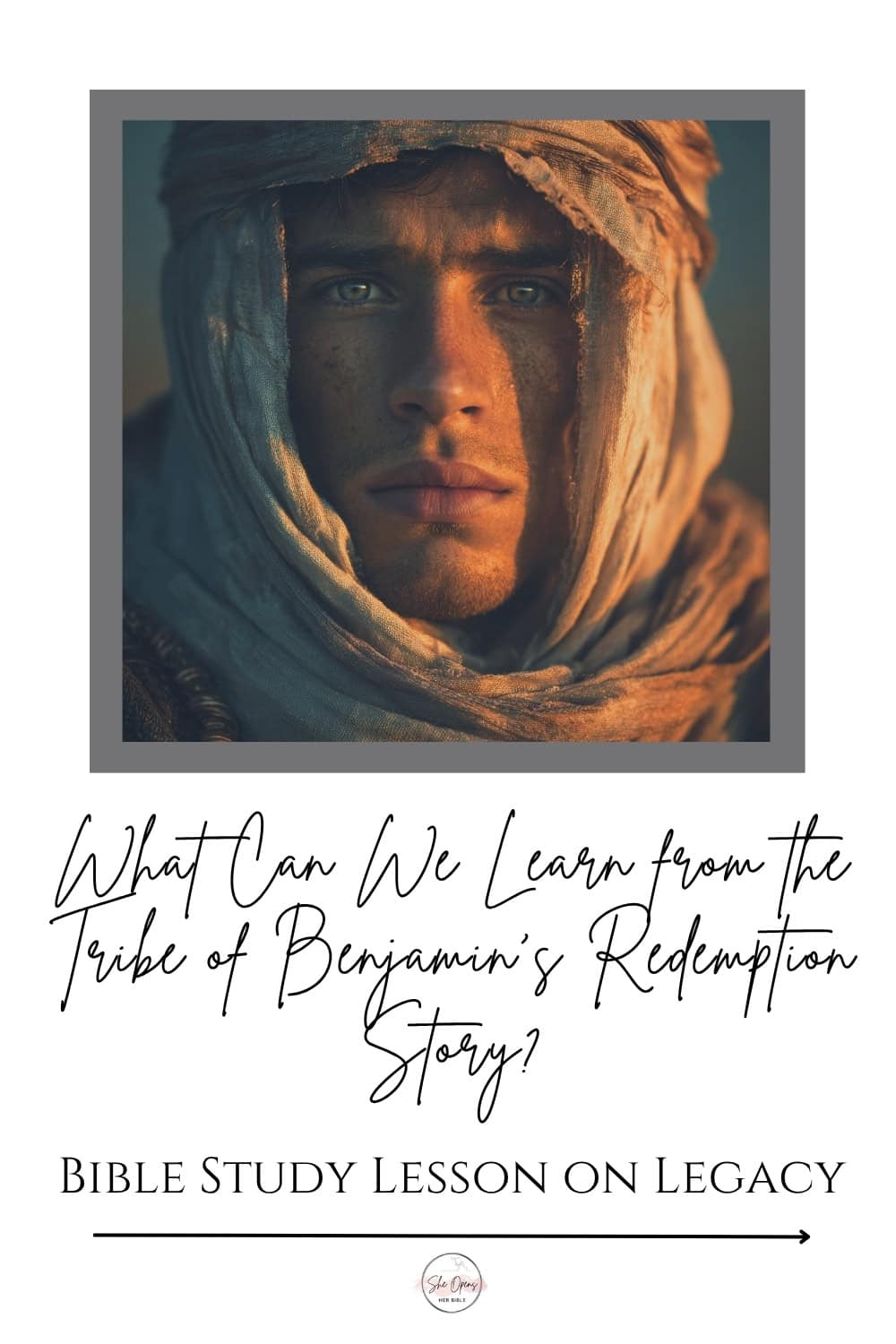
The Birth of Benjamin: A Tragic Blessing
Rachel’s Labor and Death
Benjamin was born into heartache. His mother Rachel, the beloved wife of Jacob, died giving birth to him. It wasn’t just any birth story. It was layered with deep emotion, history, and heartbreak.
Rachel had long prayed for children, and after years of barrenness, Benjamin was her second son. But the joy of his arrival was immediately shadowed by her final breath.
The Names Ben-Oni and Benjamin
As Rachel lay dying, she named her son Ben-Oni (בֶּן-אוֹנִי), which means “son of my sorrow” or “son of my mourning.” That name carried the weight of her suffering. But Jacob, in an act of prophetic re-naming, called him Benjamin (בְּנֶי-יִמָין), meaning “son of the right hand.”
That shift matters. It’s not just poetic. In ancient culture, the right hand symbolized strength, favor, and authority. Jacob was saying, “This will not be a story of sorrow. This son will carry strength.”
Symbolism Behind His Name
Benjamin’s name change teaches us that we don’t have to be defined by the pain that birthed us. What started in sorrow can become a symbol of blessing. Your identity is not locked into your suffering. God can rename what the world has labeled.
Benjamin’s Role in the Family of Jacob
The Youngest of the Twelve Tribes
Benjamin wasn’t just the youngest son. He became the patriarch of one of the twelve tribes of Israel. And let’s just say, this tribe wasn’t quiet. They were small, but mighty.
Jacob’s Favoritism and Family Tensions
After Joseph disappeared (and was presumed dead), Jacob clung to Benjamin. He was the only remaining son of his beloved Rachel, and Jacob just couldn’t bear the thought of losing him too. This favoritism shows up in Genesis 42-44, when the brothers have to travel to Egypt for food.
Reunion with Joseph in Egypt
This is one of the most moving scenes in all of Genesis. Joseph, now second-in-command in Egypt, orchestrates a test involving Benjamin to see if his brothers have changed. When Judah pleads to take Benjamin’s place, Joseph can’t hold back. He weeps and reveals his identity. That moment? It’s about reconciliation, restoration, and the long road back to trust.
Understanding the Tribe of Benjamin in the Bible
Land Allotment and Geography
The tribe of Benjamin received land nestled between Judah and Ephraim. That placed them right in the middle of things, literally. Their land included parts of Jerusalem, which later played into both tension and legacy.
Tribal Symbol and Banner
Jewish tradition holds that the symbol of the tribe of Benjamin was a wolf, based on Genesis 49:27, where Jacob prophesied:
“Benjamin is a ravening wolf; in the morning he devours the prey, and in the evening he divides the spoil.”
It speaks of courage, aggression, and fierce tenacity.
Characteristics and Prophetic Traits (Genesis 49:27)
That prophecy isn’t warm and fuzzy, but it captures Benjamin’s wild strength. This tribe was known for their skilled warriors, left-handed slingers, and unpredictable boldness (Judges 20:16). They were small, but they certainly didn’t act like it.
Key Biblical Events Involving Benjamin’s Tribe
The Civil War in Judges 19–21
A shocking crime in Gibeah, a city in Benjamin, sparked a brutal civil war. The other tribes turned against Benjamin in outrage, nearly wiping them out. In the end, only 600 men remained.
Benjamin’s Near-Extinction and Redemption
Despite the devastation, the other tribes helped Benjamin rebuild. It was an act of mercy and a picture of grace after judgment. God was not finished with them.
The Rise of Saul: A King from Benjamin
Saul, Israel’s first king, came from this almost-lost tribe. His rise shows how God can lift up someone from a broken place and give them a national purpose.
Notable Figures from the Tribe of Benjamin
King Saul
Tall and impressive, Saul was chosen by God, but his reign was marked by fear and disobedience. His life is a warning that calling alone isn’t enough; character matters.
Mordecai and Esther
Mordecai and Queen Esther were Benjamites. God used them to save the Jewish people during the Persian empire. Their story is one of courage and divine timing.
The Apostle Paul (Philippians 3:5)
Paul proudly named his heritage as a Benjamite. His life, transformed from persecutor to apostle, echoes the tribe’s legacy of unexpected impact.
Theological Symbolism of Benjamin
Son of the Right Hand: A Christological Parallel?
In Hebrew culture, the right hand represents power and honor. Yeshua sits at the right hand of the Father (Mark 16:19, Hebrews 1:3). Benjamin’s name points to this same idea; being placed in a position of favor. It’s a reminder that God elevates what begins in sorrow.
The right hand isn’t just a place of authority. It’s a symbol of restoration. Rachel’s pain didn’t write Benjamin’s whole story. God did.
From Sorrow to Strength: Redemption Themes
Benjamin’s name change from Ben-Oni to Benjamin declares that sorrow isn’t the end. God has a way of rewriting stories. Isaiah 61:3 promises beauty for ashes and joy for mourning. Benjamin’s life models that shift.
If your story began in loss or struggle, you’re not stuck. God turns broken beginnings into powerful testimonies.
Weakest Tribe, Greatest Impact (1 Corinthians 1:27)
Benjamin’s tribe was nearly erased. Yet, as we have seen, from them came Saul, Esther, Mordecai, and Paul. As Paul later wrote, God uses the weak to shame the strong. Benjamin’s legacy is a holy surprise. Their influence came not from size, but from how God chose to use them.
If you feel small or unqualified, take heart. God doesn’t need perfection. He works through the overlooked, the wounded, and the willing.

My Final Thoughts
Benjamin’s story is layered with heartbreak, loyalty, and redemption. He began life as the “son of sorrow” but became the “son of the right hand.” His tribe survived near-extinction, produced Israel’s first king, and later, an apostle who carried the gospel across the Roman world.
If God can use Benjamin, He can use you. Whatever your beginning, it doesn’t have to define your ending. From sorrow to strength…God still rewrites stories today.
Want to keep exploring the Bible like this, with sisters who love the Word and keep it real? Come join our community right here on the site. You belong with us.
And don’t forget to download your free copy of our Benjamin in the Bible Study, Reflection and Action Challenge guide below!
Frequently Asked Questions
-
Who were Benjamin’s descendants?
Benjamin had ten sons, according to Genesis 46:21. Their families became the foundation of the tribe of Benjamin. Over time, this tribe grew into a powerful yet compact force within Israel, known for their warriors and key leaders like Saul, Esther, and Paul.
-
What does the name Benjamin mean in Hebrew?
Benjamin (בְּנִי-יָמִין) means “son of the right hand.” In ancient Hebrew culture, the right hand symbolized strength, favor, and authority. Jacob gave him this name to speak life and honor over a birth story marked by sorrow.
-
Was Benjamin involved in the sale of Joseph?
No. Benjamin was the youngest and was not present when Joseph’s older brothers sold him. He remained home with Jacob, which is why he played such a central role in Joseph’s test years later in Egypt.
-
Why was the tribe of Benjamin almost destroyed?
In Judges 19–21, a horrific crime committed by men from Gibeah (a Benjamite city) led to a civil war. The other tribes of Israel turned against Benjamin, nearly wiping them out. Only 600 men survived, and the tribe had to be rebuilt from near extinction.
-
How did the tribe of Benjamin regain its place after the civil war?
The other tribes eventually showed mercy, arranging marriages to help the tribe continue. Despite their failure, Benjamin was restored, and God continued to work through them—showing His grace is always bigger than our worst moments.
-
Why was Saul being from the tribe of Benjamin significant?
Saul was Israel’s first king, and his selection from the smallest tribe was unexpected. It showed that God doesn’t choose leaders based on human strength or popularity, but on His own purpose and plan.
-
Is the tribe of Benjamin still around today?
After the exile and dispersion, the distinct tribal lines of Israel blurred. While we can’t trace the tribe of Benjamin today with certainty, their legacy remains through Scripture and the lives of those God raised from among them.
-
What lessons can we learn from Benjamin’s story?
Benjamin’s story teaches us that where you start doesn’t determine where you’ll end up. Sorrow can shift into strength, and even small or broken beginnings can lead to legacy when God is in it.
Download Your Study Guide


About Our Author
Diane Ferreira is a Jewish believer in Yeshua, a published author, speaker, seminary student, wife, and proud mom. She is the author of several books, including The Proverbs 31-ish Woman, which debuted as Amazon’s #1 New Release in Religious Humor. She is currently pursuing her graduate degree in Jewish Studies, with her favorite topics being the early church and Biblical Hebrew. Diane writes and teaches from a unique perspective, bridging her Jewish heritage with vibrant faith in the Messiah to bring clarity, depth, and devotion to everyday believers.
When she’s not writing, studying, or teaching, you’ll find her curled up with a good book, crocheting something cozy, or researching her next trip.
📚 Learn more here! | 💬 Join the discussion on our Substack!
Tree of Life (TLV) – Scripture taken from the Holy Scriptures, Tree of Life Version*. Copyright © 2014,2016 by the Tree of Life Bible Society. Used by permission of the Tree of Life Bible Society.