
Tribe of Asher: Discover the Remarkable Legacy and Prophetic Destiny
Please note that this article may contain affiliate links. As an Amazon Associate, I earn on qualifying purchases at no additional cost to you. You can read more at the bottom of this page or read my full disclosure on my Affiliate Disclosure Page
What can a quiet, coastal tribe from ancient Israel teach us about faith, purpose, and lasting legacy? In this post, we’re diving into the story of the tribe of Asher—a tribe often overlooked, yet richly blessed, and full of spiritual insight for believers in Yeshua today.
Their name is connected to joy and abundance. Their territory overflowed with olive oil. And even in the New Testament, someone from this tribe still shows up—faithful, watching, and ready to recognize the Messiah.
In this post, you’ll learn where the tribe of Asher came from, how their land shaped their legacy, why their blessings were so unique, and what their prophetic future looks like. We’ll also explore rabbinic insights, New Testament connections, and practical lessons you can apply today.
Let’s begin where all stories should—at the beginning.
Be sure to download your free copy of our printable Tribe of Asher Bible Study, Reflection and Action Challenge guide with worksheets at the end of this post! No sign up required!
His descendants would carry that name forward, becoming known for abundance, olive oil, and a quiet strength that threaded through Israel’s story. But there’s more here than just ancient history.
The blessings spoken over Asher by both Jacob and Moses, his role in Israel’s journey, and even his appearance in the New Testament reveal deep truths about how God works through the faithful, the fruitful, and sometimes the forgotten.
Jacob and Moses’ Blessings Explained
Jacob’s blessing over Asher in Genesis 49:20 reads:
“Asher’s food will be rich—he will provide delicacies fit for a king.”
Moses later blessed the tribe in Deuteronomy 33:24, saying:
“Blessed be Asher more than sons; may he be the favored of his brothers, and may he dip his foot in oil.”
TLV
These blessings are unique among the 12 tribes of Israel. While many tribes were associated with warfare or leadership, Asher was blessed with abundance and delight.
The Hebrew phrase “טָבַל בַּשֶּׁמֶן רַגְלוֹ” taval ba-shemen raglo (dips his foot in oil) conveys both prosperity and divine favor. Oil, especially olive oil, symbolized healing, joy, and anointing.
These words were more than poetic—they carried prophetic implications. The territory Asher would later inherit was indeed abundant with olive trees and fertile soil, making the blessing a literal and spiritual truth.
Asher’s Genealogy and Family Tree
The genealogy of Asher is noted in several places, including Genesis 46 and 1 Chronicles 7. Asher had four sons: Imnah, Ishvah, Ishvi, and Beriah. Notably, a daughter named Serah is also mentioned—one of the few women included in such lists.
Serah bat Asher is remembered in Jewish Midrash as a woman of great wisdom and longevity, said to have lived into the time of Moses and beyond, even entering the Land.
1 Chronicles 7:30–40 outlines the family line of Asher in more detail, highlighting the tribe’s warrior strength and leadership capacity. Despite this, their story often seems overshadowed—until we look deeper.
Geographic Allotment and Tribal Territory
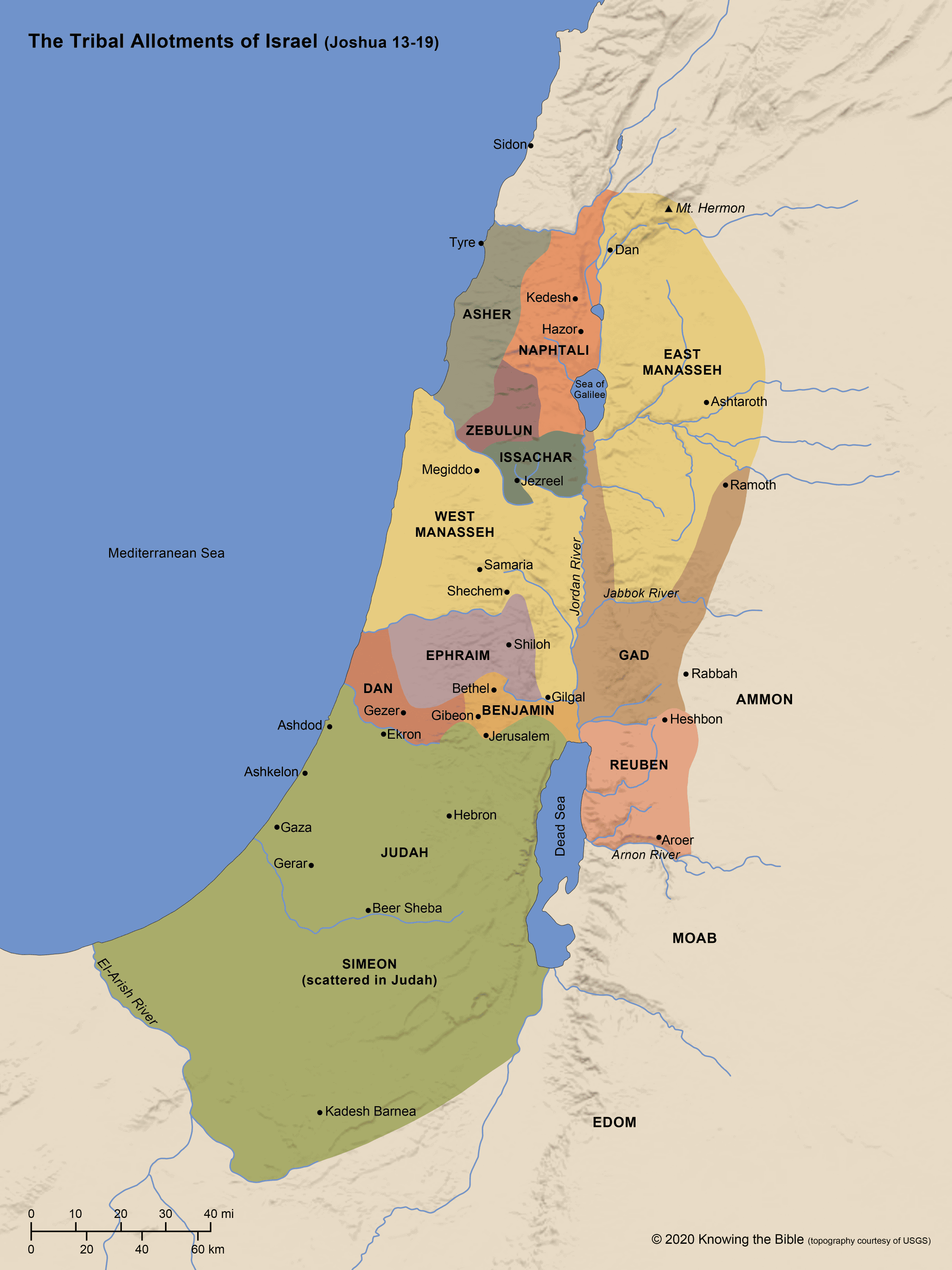
In the book of Joshua, the land given to Asher is described in Joshua 19:24–31. Their territory stretched along the Mediterranean coast, encompassing parts of modern-day Lebanon. It included cities like Acco (Acre), Tyre, and Sidon—strategic and wealthy ports.
However, Asher never fully drove out the Canaanites from their territory, and thus lived among the Phoenician peoples. This proximity created opportunities but also spiritual risks, as we’ll see later.
Fertility and Prosperity of Asher’s Land
Asher’s territory was among the most fertile in ancient Israel. The tribe became known for its olive oil production—some Jewish sources even suggest that Asher supplied oil for the entire nation.
Archaeological discoveries in the region support this, showing ancient olive presses and storage jars. Their economic role in supplying oil—used not only for food but also for anointing and temple service—was critical to the life of Israel.
Asher’s Role in the Exodus and Wilderness Encampment
During the wilderness journey, Asher was placed on the north side of the camp (Numbers 2:27–28), grouped with Dan and Naphtali. This positioning was not accidental. Asher helped guard the camp and maintain order during the Israelites’ journey.
In the first census (Numbers 1:41), Asher had 41,500 men of military age. By the second census (Numbers 26:47), the tribe had grown to 53,400. This growth signifies divine favor and fruitfulness, aligning with Asher’s name and blessing.
Asher in the Period of the Judges
The tribe of Asher, however, had a mixed record during the time of the Judges. In Judges 5:17, they are criticized for remaining “by the seashore” during the conflict against Sisera. This passivity was seen as dishonorable when compared to the bravery of other tribes.
Yet in Judges 6–7, we find Asher responding to Gideon’s call to battle, showing a willingness to stand with Israel in times of crisis. Like many of us, Asher’s story is not one of perfect obedience, but of gradual growth and redemption.
The Tribe of Asher in the United Monarchy
During the time of King David, Asher contributed men to his growing army (1 Chronicles 12:36). These were “experienced warriors prepared for battle with every type of weapon”—a striking contrast to their earlier passivity.
Under Solomon, Asher’s region remained politically significant due to its access to trade routes and port cities (1 Kings 4). But after the kingdom divided, Asher became part of the northern kingdom under Jeroboam—a kingdom often marked by idolatry and rebellion.
Spiritual and Cultural Tensions with Phoenicia
Because Asher’s territory bordered Tyre and Sidon, it was heavily shaped by Phoenician culture, which brought both wealth and the danger of mixing with pagan beliefs. The prophets often warned against Israel adopting the idolatry of these neighboring peoples.
Rabbinic tradition sometimes views Asher as aloof or passive for not fully resisting these influences. Yet there were faithful ones within the tribe who maintained covenant loyalty. This tension between assimilation and faithfulness still speaks to believers today.
Hezekiah’s Passover and Asher’s Remnant Faithfulness
A beautiful moment of redemption appears in 2 Chronicles 30:11, when King Hezekiah invites the northern tribes—including Asher—to come to Jerusalem for Passover.
Many mocked the invitation, but “some men from Asher, Manasseh and Zebulun humbled themselves and came to Jerusalem.” This remnant within Asher, faithful and responsive, shows that even among the scattered tribes, hearts remained tender toward God.
Their pilgrimage to Jerusalem was not just a journey of miles, but of repentance and reunion. It reminds us that God always preserves a faithful remnant.
Anna the Prophetess – Asher in the New Testament
The tribe of Asher reappears in Luke 2:36–38 in the person of Anna the prophetess. An elderly widow, she served in the Temple day and night with fasting and prayer. She was from the tribe of Asher.
When Yeshua was brought to the Temple, Anna immediately recognized him and “spoke about the child to all who were waiting for the redemption of Jerusalem.” This is a powerful link between the Old and New Covenants.
Anna’s life of devotion, despite the fading prominence of her tribe, is a testament to enduring faith. Through her, the tribe of Asher bore witness to Messiah.

Prophetic Significance in Revelation
In Revelation 7:6, the tribe of Asher is listed among those sealed—12,000 from each tribe. This reaffirms Asher’s place in God’s redemptive plan, despite centuries of obscurity.
The sealing is not merely symbolic. It reflects God’s faithfulness to all Israel and the continuity of His covenant promises. Asher, like each tribe, carries prophetic weight pointing to the restoration of all things.
Rabbinical and Midrashic Perspectives
Rabbinic literature often highlights the virtue and beauty of Asher’s daughters. The Talmud (Genesis Rabbah 71:10) says Asher’s daughters were sought as brides by high priests, indicating their respected status.
Midrashic texts interpret Asher’s “royal dainties” as spiritual delights, including wisdom and peace. Asher is also seen as a bridge-builder—blessed materially but meant to bless others spiritually.
Modern Interpretations and Legacy
In recent years, interest in the so-called “lost tribes” has revived speculation about Asher’s descendants. Some point to DNA studies or oral traditions in distant communities. These ideas are intriguing, but remain speculative.
More practically, the legacy of Asher lives in how we understand blessing, contentment, and faithful presence. Asher was not called to lead armies or write psalms—but to be fruitful, stable, and quietly devoted.
That is a holy calling many of us can relate to.
Lessons from the Tribe of Asher for Believers Today
While the tribe of Asher may not take up much space in the biblical spotlight, its story offers some surprisingly relevant truths for modern believers.
From their quiet faithfulness to their material blessing, Asher teaches us how to walk in God’s favor without losing sight of His purpose. Here are five lessons we can carry into our own spiritual journey.
- Blessed to Be a Blessing
- Faithfulness in the Margins
- Don’t Let Comfort Replace Commitment
- Fruitfulness Is a Form of Witness
- God Sees the Remnant
Let’s look at them in more detail:
1. Blessed to Be a Blessing
Asher was abundantly blessed—his land fertile, his produce rich, and his name itself meaning “happy.” But blessings in Scripture are never just for personal comfort. They are meant to be shared. Believers are reminded that material or spiritual blessings are not the end goal. We are blessed so we can serve, give, and build others up (2 Corinthians 9:11).
2. Faithfulness in the Margins
Asher was not one of the leading tribes and rarely stood at the forefront of battle or politics. Still, when revival came—like during Hezekiah’s Passover—some from Asher responded (2 Chronicles 30:11). Faithfulness in quiet corners matters to God. You don’t have to be prominent to be precious in His plan.
3. Don’t Let Comfort Replace Commitment
The tribe of Asher lived in a wealthy, fertile land near Phoenicia. Yet their comfort likely contributed to their spiritual passivity (Judges 5:17). This is a warning for modern believers not to let material ease dull our hunger for righteousness or obedience to God’s calling.
4. Fruitfulness Is a Form of Witness
Asher’s oil wasn’t just a product—it symbolized healing, consecration, and light. Believers today are called to be fruitful, bearing the kind of spiritual oil that brings light to others—whether that’s peace, wisdom, or compassion (Matthew 5:14-16).
5. God Sees the Remnant
Even when most of the northern tribes turned away, Asher still had a remnant. And from that remnant came Anna the prophetess, who recognized the infant Yeshua in the Temple. This teaches us that God always preserves a faithful remnant—even in spiritually dry seasons.
My Final Thoughts
The tribe of Asher teaches us that sometimes the most powerful testimonies come not from public acts of heroism, but from quiet, enduring faithfulness. Whether in Anna’s lifelong intercession or the remnant who returned to Jerusalem, Asher reflects God’s heart for the humble.
Their story is a reminder that blessing is not just about abundance—it’s about purpose. We are blessed to be a blessing. And like Asher, we’re invited to bring healing, stability, and joy to the world around us.
What can you learn from the tribe of Asher? I’d love to hear your thoughts! Drop a comment below!
Want to learn more about the Tribes of Israel? Sue has a book on the topic called The 12 Tribes of Israel (or is it 14?) & Lessons We Can Learn! You can get a copy on Amazon!
And join the conversation in our She Opens the Bible Study Facebook group. Let’s walk this journey of discovery together.
Don’t forget to download your free copy of our Tribe of Asher Bible Study, Reflection and Action Challenge guide below!
FAQs
-
Who was Asher in the Bible?
Asher was the son of Jacob and Zilpah, Leah’s handmaid. His name means “happy” or “blessed,” and his descendants formed one of the 12 tribes of Israel.
-
Why is the Tribe of Asher important?
Though not always in the spotlight, Asher was uniquely blessed with prosperity and peace. His story teaches lessons about contentment, quiet strength, and faithful presence.
-
What was Asher known for?
Asher was known for producing rich food and olive oil. Moses blessed the tribe with the words, “may he dip his foot in oil,” reflecting their abundance.
-
Where was the land of Asher?
Asher’s territory was in the northwest part of ancient Israel, along the Mediterranean coast, including cities like Acco, Tyre, and Sidon.
-
Is the Tribe of Asher mentioned in the New Testament?
Yes. Anna the prophetess, who recognized Yeshua in the Temple, was from the tribe of Asher (Luke 2:36). The tribe also appears in Revelation 7:6 among the sealed tribes.
Download Your Printable Study Guide


About Our Author
Diane Ferreira is a Jewish believer in Yeshua, a published author, speaker, seminary student, wife, and proud mom. She is the author of several books, including The Proverbs 31-ish Woman, which debuted as Amazon’s #1 New Release in Religious Humor. She is currently pursuing her graduate degree in Jewish Studies, with her favorite topics being the early church and Biblical Hebrew. Diane writes and teaches from a unique perspective, bridging her Jewish heritage with vibrant faith in the Messiah to bring clarity, depth, and devotion to everyday believers.
When she’s not writing, studying, or teaching, you’ll find her curled up with a good book, crocheting something cozy, or researching her next trip.
📚 Learn more here! | 💬 Join the discussion on our Substack!
Tree of Life (TLV) – Scripture taken from the Holy Scriptures, Tree of Life Version*. Copyright © 2014,2016 by the Tree of Life Bible Society. Used by permission of the Tree of Life Bible Society.