
The Tribe of Issachar in the Bible: Hebrew Meaning, History, and Theology
Please note that this article may contain affiliate links. As an Amazon Associate, I earn on qualifying purchases at no additional cost to you. You can read more at the bottom of this page or read my full disclosure on my Affiliate Disclosure Page
Of all twelve tribes of Israel, few are as consistently overlooked and as consistently faithful as the tribe of Issachar in the Bible. They are the tribe without a celebrity patriarch, without a scandalous story, without a monument in the Sunday school memory.
And yet, tucked inside the genealogical lists and census records of the Hebrew Bible is a portrait of extraordinary depth: a people who bore their burdens without complaint, whose scholars shaped the calendar of a nation, and whose two hundred chiefs could read an entire political moment with uncanny clarity.
That single verse, “they understood the times, to know what Israel ought to do” (1 Chronicles 12:32, TLV), has echoed across three millennia for good reason.
This study follows Issachar from his birth in Genesis to his tribe’s final appearance in the book of Revelation. Along the way, we will examine the Hebrew name, the prophetic blessings of both Jacob and Moses, the geography of Issachar’s inheritance, and what the scholarly, burden-bearing spirit of this tribe means for those who study the Word today.
Don’t miss your free download of our Tribe of Issachar Bible Study Guide! This printable resource includes worksheets, thought-provoking questions, and challenges to help you on your faith journey. Best of all, no sign-up is required—grab your copy at the end of this post!
What Is the Tribe of Issachar in the Bible? An Overview
Before we trace the tribe through Scripture, it helps to understand who Issachar was as a person and why his descendants became one of the most intellectually distinguished of the twelve tribes of Israel.
Issachar was the ninth son of the patriarch Jacob and the fifth son of his wife Leah. He was born in Padan-aram under circumstances that were, by any ordinary measure, complicated. His birth story is inseparable from the story of his mother, and his name carries that story inside it for all of Scripture to read.
The tribe that descended from him inherited some of the most fertile land in all of Canaan, contributed scholars to the national leadership of Israel, and produced men whose discernment became legendary. From the Sinai census to the sealing of Revelation 7, Issachar is present, faithful, and almost always quiet about it.
The Birth of Issachar: Leah, Mandrakes, and the God Who Rewards
The story of Issachar’s birth begins with his mother’s longing. Leah was unloved, outpaced in Jacob’s affections by her younger sister Rachel. She had borne four sons (Reuben, Simeon, Levi, and Judah) while Rachel remained childless. Then came an unexpected reversal. Leah’s son Reuben found mandrakes (dûdā’îm, דּוּדָאִים) in the field, plants associated in the ancient world with fertility. Rachel, still without a child, bargained for them.
“So Leah said, ‘Then he will sleep with you tonight in exchange for your son’s mandrakes.’ Jacob came in from the field in the evening, and Leah went out to meet him and said, ‘You must come to me, for I have hired you with my son’s mandrakes.’ So he slept with her that night.”
Genesis 30:16 (TLV)
The transaction was unseemly by any measure. And yet God was present in it. Leah conceived, and when she bore a fifth son, her declaration was theological, not merely domestic:
“Then Leah said, ‘God has given me my reward because I gave my maidservant to my husband.’ So she called his name Issachar.”
Genesis 30:18 (TLV)
The word she used, śĕkārî (שְׂכָרִי), meaning “my reward” or “my wages,” became the child’s name. This is the catalyst for the name יִשָּׂשכָר (Yiśśāḵār): born from a moment of divine recompense, in a family arrangement that defied easy categorization, to a woman who never stopped looking for God’s hand in her circumstances.
Jacob’s Blessing Over Issachar
Genesis 49:14–15
At the end of his life, Jacob gathers his sons and speaks prophetic words over each of them, and what he says about Issachar is both vivid and a little surprising. He says:
“Issachar is a strong donkey, crouching between the saddlebags. He saw that the resting place was good and that the land was pleasant, so he bent his shoulder to the burden and became a forced laborer”.
Genesis 49:14–15, (TLV)
To modern readers, comparing someone to a donkey doesn’t sound especially complimentary. But in the ancient world, this was not an insult. A strong donkey was an animal of real value, known for endurance, steadiness, and the ability to carry heavy loads over time. Jacob’s image suggests that Issachar would be marked not by flashy strength or military dominance, but by the kind of strength that endures, bears weight, and keeps going.
The picture of crouching between the saddlebags adds to that sense. It suggests a tribe that settles into its burden and accepts the kind of work it has been given to carry. Jacob says Issachar saw that the land was good and pleasant, which means this tribe would recognize the goodness of what was before them. But that goodness came with responsibility. Fertile land requires labor. Blessing still asks something of the one who receives it.
Later Jewish tradition picked up on this image and developed it in a beautiful way, connecting Issachar’s “burden” not only to labor in the land but also to the burden of Torah study.
Whether or not that is Jacob’s direct meaning in Genesis 49, it does reflect something important about the tribe’s later reputation. Issachar becomes associated not only with strength, but with steadiness, discernment, and the willingness to carry what matters faithfully over time.

Moses’s Blessing Over Issachar
Deuteronomy 33:18–19
Much later, before his own death, Moses also speaks a blessing over the tribes of Israel, and when he comes to Issachar, he pairs him with Zebulun. He says:
“Rejoice, Zebulun, in your going out, and Issachar, in your tents”.
Deuteronomy 33:18, (TLV)
That pairing is deeply meaningful. Zebulun is associated with going out, with movement, commerce, and outward-facing work. Issachar, by contrast, is associated with tents, with remaining, dwelling, and rootedness. One goes out, and one stays in. Both are blessed.
That is worth noticing because Scripture doesn’t present one as more spiritual than the other. The people of God have always needed different kinds of callings. Some are sent out into visible, active work. Others are called to remain, build, study, pray, and labor faithfully in quieter places. Moses’s blessing reminds us that both forms of obedience matter.
Jewish tradition later developed this pairing into the well-known picture of Zebulun and Issachar, where Zebulun labors materially and Issachar devotes itself to study and spiritual labor.
Whether or not that is the plain meaning of Deuteronomy 33, it is still a meaningful reflection on how the people of God function together. Different callings can still produce shared fruit, and hidden faithfulness is not lesser faithfulness.
The Territory of the Tribe of Issachar
Joshua 19:17–23
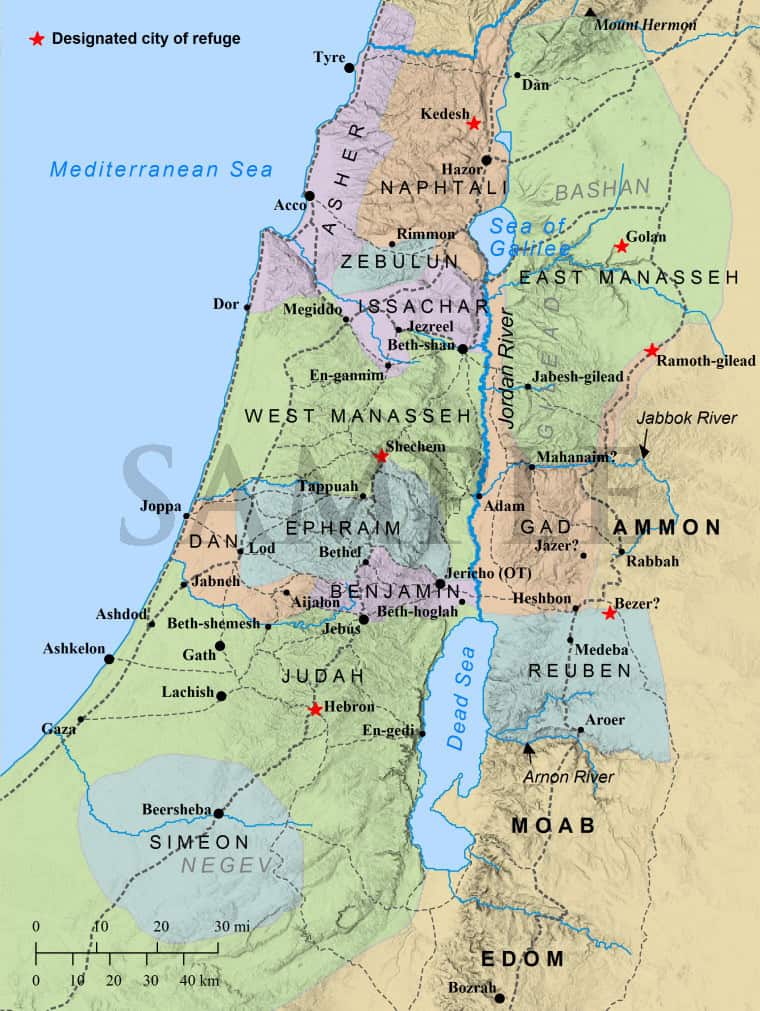
When the promised land was divided among the tribes, Issachar received a portion in one of the richest and most fertile regions in the land. Their inheritance lay in what we know as the Jezreel Valley, a broad and productive area in northern Israel that would become one of the most important corridors in the region.
This was not a barren or forgettable allotment. It was good land, rich in agricultural potential and natural beauty. That detail helps make sense of Jacob’s earlier words about Issachar seeing that the land was pleasant. They really did receive a desirable inheritance.
But like so many things in Scripture, gift and burden came together. The Jezreel Valley was not only fertile, it was also exposed. Armies moved through it. Trade routes crossed it. It was a place where both blessing and pressure could meet.
In that sense, Issachar’s inheritance fits the tribe’s broader story remarkably well. They were given something good, but that goodness came with responsibility, labor, and the need for endurance.
There is something deeply instructive in that. Sometimes the very places God gives us are both a gift and a calling. Issachar’s story reminds us that fruitful ground often requires strong shoulders.
Issachar in the Wilderness
Before Issachar ever entered its inheritance, the tribe had to walk through the wilderness like the rest of Israel. In the first census recorded in Numbers 1, Issachar is counted among the fighting men of Israel as a substantial tribe. By the second census in Numbers 26, the tribe had grown significantly, which is striking considering the forty difficult years that had passed in between.
That growth is worth noticing. Issachar was not simply surviving the wilderness. The tribe was being preserved and strengthened through it.
In the arrangement of the camp, Issachar was placed on the east side of the tabernacle alongside Judah and Zebulun. This meant that when Israel broke camp and moved forward, Issachar was among those near the front.
That detail is especially interesting for a tribe later associated with steadiness and discernment, because it reminds us that biblical wisdom is never passive. Issachar may become known for understanding and faithfulness, but from the beginning they were also positioned to move when God moved.
That is a meaningful combination. There is a kind of faithfulness that is quiet and rooted, but true rootedness should never be confused with passivity. Issachar seems to embody both stability and readiness.
The Defining Verse
1 Chronicles 12:32
If there is one verse that has most shaped the legacy of Issachar, it is 1 Chronicles 12:32:
“From the sons of Issachar, men who had understanding of the times, to know what Israel should do — 200 chiefs, and all their relatives were under their command”.
TLV
This verse is often quoted, but it deserves to be read carefully. The men of Issachar are not praised simply for being observant or insightful in a vague sense. They are commended because they understood the moment they were living in and knew what faithfulness required in that moment.
The context is important. These men came to David during a major turning point in Israel’s history, when the kingdom was shifting and the people needed to recognize what God was doing. The tribe of Issachar is singled out not for bringing the largest army, but for bringing discernment.
That is what makes this verse so powerful. Biblical discernment is not merely the ability to notice what is happening around you. It is the ability to see your moment clearly enough to respond wisely and faithfully within it.
Some Jewish traditions connect this discernment to deep Torah study and even to calendrical wisdom, seeing Issachar as a tribe especially gifted in understanding sacred time and spiritual rhythms.
Whether or not we press that too far, the larger picture is clear. Issachar became known as a tribe that could read the times through the lens of God’s truth and then act accordingly.
And that, honestly, is still one of the most needed forms of wisdom today.
Issachar Through the Book of Judges and the Monarchy
Issachar doesn’t dominate the narrative in the way some of the other tribes do, but when they appear, they are consistently present at important moments.
In the Song of Deborah in Judges 5, which is one of the oldest pieces of poetry in Scripture, Issachar is named among the tribes that showed up when it mattered. Deborah sings, “And the princes of Issachar were with Deborah; as was Issachar, so was Barak, rushing into the valley behind him” (Judges 5:15). When other tribes hesitated, Issachar did not. They answered the call.
That detail is important because it helps balance the image we receive from Genesis 49. Issachar may be described as a burden-bearer, but that does not mean passive or inactive. There is a difference between choosing a life of steady labor and shrinking back from responsibility. In this moment, Issachar is fully engaged.
Later, in Judges 10, we meet Tola, a judge from the tribe of Issachar. His story is brief and quiet. He leads Israel for twenty-three years, and there is no dramatic victory or crisis recorded. Just steady leadership over time. It is easy to overlook a figure like that, but there is something deeply consistent with Issachar’s character here. Not every calling is loud. Some are defined by endurance and faithfulness over the long haul.
There are also moments in Israel’s monarchy where individuals from Issachar rise to power, including kings of the northern kingdom. These accounts are far less encouraging. They are marked by instability and violence, reminding us that no tribe’s story is purely one thing. Even within a tribe known for wisdom and steadiness, there are threads that move in a very different direction.
And yet, Issachar continues to show up in moments of return. In 2 Chronicles 30, when King Hezekiah calls the people back to Jerusalem for Passover, men from Issachar are among those who come, even though they are not fully prepared according to the law. Instead of turning them away, Hezekiah prays for them, asking God to forgive those who have set their hearts to seek Him. And God responds with mercy.
Issachar comes imperfectly, but sincerely. And that matters.
Issachar in Prophetic Literature and Revelation
Issachar doesn’t disappear from the story as Scripture moves forward.
In Ezekiel’s vision of the restored land in Ezekiel 48, the tribes are once again given their portions, and Issachar is included among them. The prophet’s vision is one of restoration, order, and wholeness, and Issachar has a place in that restored future. The tribe that may seem quieter in the narrative is not forgotten in God’s purposes.
Then, in the book of Revelation, Issachar appears again in a surprising place. In Revelation 7, as the 144,000 are sealed from the tribes of Israel, Issachar is named among them: “From the tribe of Issachar, twelve thousand were sealed” (Revelation 7:7, TLV).
That inclusion matters.
From Genesis to Revelation, Issachar remains part of the story. The tribe that is often less visible is still counted, still known, still included in the unfolding of God’s redemptive work.
There is something deeply comforting in that.
God does not lose track of the quiet ones.
He does not overlook the ones who are not center stage.
Issachar’s presence at the end reminds us that faithfulness, even when it feels hidden, is never forgotten by God.
Issachar and the New Testament
While the tribe of Issachar is not directly named in the New Testament, the kind of discernment associated with Issachar shows up clearly in the teachings of the apostles.
Paul writes in Romans 13:11:
“You know the time, that it is already the hour for you to awaken from sleep.”
TLV
In Ephesians 5:15–17, he urges believers to walk wisely, “making the most of every opportunity, because the days are evil.”
In both places, the focus is not just on knowledge, but on awareness of the moment and the ability to respond appropriately. There is a call to recognize where you are in the larger story of what God is doing and to live in light of that reality.
The New Testament often uses two Greek words for time. One refers to chronological time, the steady passing of moments. The other refers to appointed or meaningful time, the kind of moment that carries weight and requires a response.
The sons of Issachar, in 1 Chronicles 12, seem to embody both kinds of awareness. They understood what was happening, and they recognized what needed to be done.
That same kind of wisdom is still needed. The call to discern the times is not about predicting the future. It is about learning to read your present moment through the lens of God’s Word and responding faithfully within it.
Selah: A Pause for Reflection
Before moving on, it is worth slowing down here.
The sons of Issachar understood the times, but that kind of understanding did not appear out of nowhere. It was formed over time. It was shaped through steady engagement with God’s Word and a life lived in awareness of Him.
What would it look like for you to live with that kind of discernment?
Not trying to predict what comes next, but learning to recognize what God is doing right now in your own life, your own season, your own calling.
Consider this:
Where in your life are you being asked to carry something faithfully, not because you have no choice, but because it has been given to you?
What rhythms of Scripture and prayer are shaping your ability to recognize what matters in your current season?
Is there an area where you are being invited to slow down, pay attention, and respond more intentionally?
Issachar’s strength was not found in constant visibility, but in steady formation over time. That kind of life does not always feel significant in the moment, but it prepares you for the moments that are.
Key Theological Themes in the Tribe of Issachar
One of the clearest themes in the story of Issachar is that hidden faithfulness produces visible fruit over time. The tribe is not always at the center of the narrative, but when key moments arise, they are ready. Their preparation happens in quieter places, but it shows itself when it matters.
Another theme is that burden-bearing is not weakness. Jacob’s image of Issachar carrying a load is not a criticism. It is a description of a particular kind of strength. There is a kind of calling that involves carrying weight for the sake of others, and Scripture does not treat that as lesser.
We also see that discernment grows out of sustained engagement with God’s Word. The men who understood the times were not simply intuitive or naturally perceptive. Their ability to recognize what was happening and respond wisely points to a deeper formation that had taken place over time.
Finally, Issachar reminds us that God’s faithfulness includes those who are easily overlooked. From their inheritance in the land to their appearance in Revelation, the tribe is never lost in God’s story. Their presence is a quiet but steady reminder that no part of God’s people is forgotten.
My Final Thoughts on the Tribe of Issachar in the Bible
The tribe of Issachar does not dazzle. They don’t part seas or slay giants or dream dreams that reshape nations. What they do is something quieter and, I would argue, harder: they show up, they bear their load, and they study until they can see clearly. In a culture that rewards visibility, Issachar is a standing invitation to reconsider what faithfulness actually looks like.
That verse in 1 Chronicles 12:32 has stayed with me through this study. Two hundred men who understood the times and knew what to do. Not because they were prophets. Not because they had a platform. Because they had spent years in the Word until the Word had formed in them a kind of sight that the rest of the nation needed.
If you are in a season that feels obscure, if you are bearing burdens no one seems to notice, if you are studying and praying and showing up without much to show for it, Issachar is your tribe. The reward is real. The name says so. And the God who rewarded Leah in a complicated tent in Padan-aram is still the God who sees what is happening in yours.
And don’t forget to download your free copy of our Issachar Bible Study guide below!
Frequently Asked Questions
-
What does the name Issachar mean in Hebrew?
The name יִשָּׂשכָר (Yiśśāḵār) is connected to the Hebrew root שָׂכַר (sachar), which means to hire or reward. It can be understood either as “man of hire” or “there is a reward,” both of which connect to the story of his birth in Genesis 30.
-
Who was Issachar in the Bible?
Issachar was the ninth son of Jacob and the fifth son of Leah. He became the ancestor of one of the twelve tribes of Israel, and his descendants settled in the fertile region of the Jezreel Valley.
-
What is the significance of 1 Chronicles 12:32?
This verse highlights the tribe of Issachar as men who understood the times and knew what Israel should do. It emphasizes discernment that leads to action, not just awareness.
-
Where was the tribe of Issachar located?
Issachar’s territory was in northern Israel, centered in the Jezreel Valley, one of the most fertile and strategically important regions in the land.
-
What can believers learn from the tribe of Issachar?
Issachar’s story points to the value of steady faithfulness, the importance of discernment shaped by Scripture, and the truth that God sees and honors lives that are not always visible but are deeply faithful.
Download Your Tribe of Issachar Study Guide


About Our Author
Diane Ferreira is a Jewish believer in Yeshua, a published author, speaker, seminary student, wife, and proud mom. She is the author of several books, including The Proverbs 31-ish Woman, which debuted as Amazon’s #1 New Release in Religious Humor. She is currently pursuing her graduate degree in Jewish Studies, with her favorite topics being the early church and Biblical Hebrew. Diane writes and teaches from a unique perspective, bridging her Jewish heritage with vibrant faith in the Messiah to bring clarity, depth, and devotion to everyday believers.
When she’s not writing, studying, or teaching, you’ll find her curled up with a good book, crocheting something cozy, or researching her next trip.
📚 Learn more here! | 💬 Join the discussion on our Substack!
Tree of Life (TLV) – Scripture taken from the Holy Scriptures, Tree of Life Version*. Copyright © 2014,2016 by the Tree of Life Bible Society. Used by permission of the Tree of Life Bible Society.
Great insight on the Tribe of Issachar. Thank you for putting all the pieces together in this meaningful post.
This is good stuff to read.. the Issachar resembles the Mexican characters.
I’m so glad you enjoyed it! Thanks for sharing and stopping by! Have a blessed day!
Searching for more information and more meaning about Issachar as stated in 1Chronicles 12:32. This is the best so far for me. Thank you for the write up.
From Nigeria